






Can You Drink Tap Water in Amsterdam? Everything You Must Know
by
Dr. Jonathan Doyle - Updated December 16, 2025


Amsterdam is one of the most visited cities in Europe, known for its canals, museums, and relaxed atmosphere.
When traveling with children or elderly family members, many travelers will care about drinking water safety.
They wonder: Can we drink tap water in Amsterdam?
Amsterdam’s tap water is the cleanest, safest, and best-tasting in Europe. But some households still choose to
install additional filtration systems.
These mixed messages can leave travelers confused about what to trust.
To help you have a more safe trip, we'll introduce Amsterdam’s tap water safety, taste, sustainability aspects,
and useful advice for global visitors.
Is Amsterdam Tap Water Safe to Drink?
The tap water in Amsterdam has regulations from the Netherlands Drinking Water Decree, regarded as one of the
toughest in Europe. The regulations cover all aspects of the production process, from protecting the source to
the distribution stage, and meet the EU Drinking Water Directive. Let's figure out what makes it safe:
1. Protected source areas
Amsterdam relies heavily on natural dune areas and protects groundwater reserves. These areas are protected from
pollution, agricultural runoffs, and industries. The water use regulations ensure that the water does not get
contaminated even before it reaches water treatment plants.
2. Innovative dune filtration
The dunes, situated between Amsterdam and the North Sea, serve as a natural water purification system. Water
slowly passes through the sand, removing microbes, organics, and sediments. This process works much better than
some city water purification systems, in which water goes through extensive chemical treatment.
3. Real-time monitoring systems

Amsterdam’s water works has ongoing testing at various locations throughout the water distribution network.
Testing conducted includes screening for the presence of bacteria, viruses, heavy metals, pesticides, nitrates,
microplastics, PFAS, and other “emerging contaminants.” Results are often published
publicly, reflecting a
commitment to transparency.
4. Minimal reliance on chemicals
As dune filtration works quite efficiently, the use of limited disinfectants is practiced. The water companies
in the Netherlands avoid high chlorine treatment, and in cases where chlorine treatment has been
adopted, the
chlorine residue has always been kept to the lowest possible levels, sufficient for safe distribution.
5. Strict distribution control
The Netherlands enforces rules ensuring old pipes are regularly replaced, leaks are minimized, and pressure
levels are maintained. This reduces contamination risks associated with aging infrastructure.
How Does Amsterdam’s Tap Water Taste?
The water in Amsterdam has always been famous for its freshness, mildness, and softness. Many travelers describe
it as:
- clean and neutral
- free from strong odors
- smooth to drink
- not mineral-heavy
Why the Flavor Is So Mild
The water, softened through dune filtration, has fewer minerals like calcium and magnesium, and this results in
water with a light, clean taste without the chalky or metallic taste found in some harder-water regions of
Europe.

The lack of chlorine in Amsterdam waters, too, affects the taste considerably. People who are accustomed to the
smell of chlorine in water, in the UK and French cities, would notice the softness in Amsterdam.
Minor Regional Differences
Although the city-wide taste is consistent, slight differences may occur based on:
- pipe materials
- building age
- distance from treatment facilities
However, these variations are small and do not affect safety.
What About Contaminants in Amsterdam's Tap Water?
Microplastics, PFAS, and pharmaceuticals have become prominent water issues in Europe. And what about
contaminants in this city's Tap Water?
Microplastics
Rosamond Hutt, a senior writer at World Economic Forum, noted that “the Amsterdam treatment system works
well in reducing micro-plastics to a low level.” Natural dune filtration helps trap particles before they
reach treatment facilities, and additional purification processes remove most of the remainder.
PFAS
The Netherlands has strict regulations concerning the pollution of PFAS. Today, most treatment works in the
Netherlands make use of advanced technologies involving carbon and membranes in an effort to keep the levels far
below the EU regulations.

Pharmaceuticals and Hormones
Dutch treatment facilities monitor pharmaceuticals, pesticide residues, and chemical contaminants with modern
lab equipment. Concentrations that do appear tend to be far below risk levels set by EU safety assessments.
Chlorine
Amsterdam uses far less chlorine compared to many European cities. Chlorine is added in low concentrations only
when needed to maintain microbiological safety in the network. People who are particular about their taste and
smell sensitivity may find Amsterdam water quite pleasant.
Is Amsterdam's Tap Water Safe in Restaurants, Cafes, and Hotels?
Generally, amestaurants and cafes in Amsterdam usually offer tap water when asked. Some might charge a nominal
service fee, but this isn't because the water isn't safe—to the contrary, it's just a service charge.
In Hotels
The water in hotel faucets comes from the same source as in residential buildings and has the same water quality
standards. You can drink from bathroom taps, room sinks, or hotel restaurants without concern.
Public Places
Public buildings like libraries, museums, and community centers may provide water fountain stations. These could
include “Refill Water” and “Drinkwater” water fountain stations.
Is Bottled Water Needed in Amsterdam?
In general, no. Bottled water is mostly unnecessary unless you:

- prefer sparkling water
- want specific mineral contents
- are purchasing flavored options
In terms of environment and cost, tap water is the better choice. The government in the Netherlands advocates
water conservation and reducing the use and disposal of plastic water bottles, making the act of carrying a
water bottle a normal process.
Should You Use a Water Filter in Amsterdam?
The use of a filter is unnecessary in terms of personal health and safety, but some travelers still choose one
for personal preferences.
For short-term visitors / tea lovers:
If you’re going to visiting Amsterdam and love making tea or need hot water, many restaurants may not provide
hot water for you. So you need to put this on the list. Waterdrop A2 hot & cold water filter is many
visitor's option.
As a Countertop RO unit, the A2 system is installation-free, a true plug-and-play design suitable for temporary
kitchens, apartments, or RVs. It provides instant cold water (15℃) and hot water (up to 95℃), meeting diverse
drinking needs for travelers.
For long-term residents:
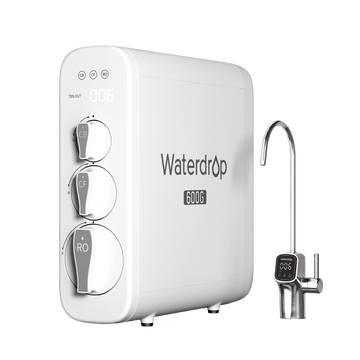
If you plan to live in Amsterdam long-term and have higher expectations for water quality, then an RO system
will be the ideal choice for you. Waterdrop G3P800 can effectively reduce PFAS by 99%, it also has 800 GPD high
capacity.
This high flow rate ensures that you get pure water instantly, filling a 150ml cup of water in just 4.3 seconds.
Otherwise, G3P800 can save 70% of under-sink space and eliminates the risk of bacterial second contamination
Conclusion
Amsterdam tap water has long been known and recognized as safe, clean, and of high quality, even meeting some of
the toughest quality standards in all of Europe. In Amsterdam, water can be drunk safely at all hotels, in all
households, and even from water spouts in the city.
For families or individuals who prefer extra reassurance, portable or countertop water filters provide a
convenient way to maintain consistent taste and quality, especially when traveling across different European
cities.
FAQs About Drinking Water in Amesterdam
Does Amsterdam offer free public refill stations for travelers?
Yes. Amsterdam provides numerous public refill stations sponsored by Waternet and municipal programs. These
stations are located in parks, near tram stops, in popular tourist zones, and inside public buildings. Maps of
refill locations are available through several local apps or search on Google map.
Is the water pressure in Amsterdam sufficient for reliable showers and daily use?
Amsterdam generally provides the resident with stable and high water pressures in their housing, hotels, and
commercial buildings. Most hotels and rental apartments offer steady pressure suitable for showers, dishwashing,
and all household activities.
Are there any health concerns for people with sensitive stomachs when visiting the Netherlands?
People with delicate stomachs normally don't have any problems with the water in Amsterdam. Sometimes digestive
sensitivity can sometimes occur due to differences in mineral content compared with a visitor’s home country.
You can use a lightweight travel filter to help your body adjust gradually over the first day or two.
Can infants and toddlers safely consume water used for preparing formula or food?
Amsterdam tap water is treated to a high standard, making it suitable for preparing infant formula or food.
Parents typically boil water for formula preparation, which is standard practice worldwide.
Is it common for Amsterdam households to use additional water treatment devices?
In most households in Amsterdam, people depend on municipal tap water alone, unaccompanied by any purification
measures, since the water is clean, soft, and has stable quality. Some families make use of faucet
water filters
to improve taste and reducing mineral buildup on appliances.

Choose Your Water Solutions
- Smart Reverse Osmosis System No Tank, No Bacteria
- Water Filter for Sink Space & Water Saving
- Refrigerator Water Filter Pure Water, Effortlessly
- Water Filter Pitcher Stay Hydrated Always
- RO System Replacement Filters Change Your Filters Regularly
Categories
- Buyer's Guide Complete buying guides to help you choose wisely
- Water Contaminants Offer the best solution to solve the water problems
- Water Stewardship Responsibility for sustainable water management
- Home and Wellness A better and healthier world for individuals and families
- Customer Voice Take a look at how other users evaluate Waterdrop


